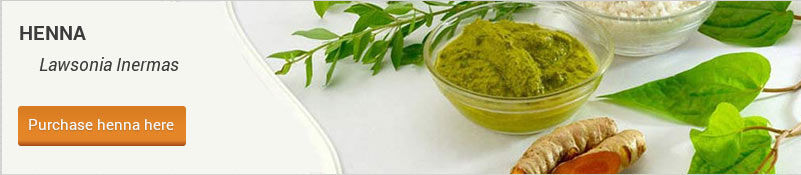
Henna (Lawsonia inermis) has many wonderful uses it has. Henna dates back over 5000 years ago and is widely used around the globe. Some call it a shrub and some call it a plant. The henna plant does bloom and thrives in hot dry desert places. Henna is a shrub, not a tree, and is used for tattoos, hair, and dying fabrics.
Our Henna is Better Than Body Art Quality (BTBAQ)
Henna is A Shrub
Henna, or Lawsonia Inermis, is a tall shrub (or a small tree), growing 2 – 6 meters high in its natural form. Part of the Lythraceae family, it is found mostly in the tropical and sub-tropical regions of Asia, northern Africa, and even America. The plant carries small, fragrant white and red flowers.
The henna or mehndi plant contains a burgundy dye molecule – Lawsone (hence the name Lawsonia) – concentrated in the leaves. This molecule easily bonds with protein and has been used to dye hair, skin, finger-nails, and more.
Henna Has Many Uses
Henna has a multitude of uses and applications, although most of these are not well known in the West. However, the knowledge has been spreading along with the emigration of people from areas where the Lawsonia Inermis naturally abounds.
The most well-known application of henna is mehndi, also known as Mehendi, and Mehandi. It is a form of temporary tattoo or body art that originates from the Bronze Age. Its application is painless, and the resulting artwork stays visible for anything from a few days to a month – depending on the strength of the application, and the time it was left on the skin. Recent improvements in the cultivation and processing methods of the henna plants and leaves (and of course the emigration factor) have led to a surge in its popularity.
The henna leaves have also been used successfully to treat a number of ailments. It has been used to coagulate blood in open wounds, treat headaches, and more. The sedative qualities of Lawsonia inermis have also made it a popular form of treatment for burns and eczema. Additionally, it is used as a treatment for nail fungus.
Other uses of henna include being used to dye and preserve cloth, as well as to dye hair and leather. The flowers of the Lawsonia Inermis are used to make perfume. It is even used to repel insects
Products sold as “black henna”, or “neutral henna”, are actually not really Henna products at all. What is sold as “black Henna” is actually partly fermented, dried indigo, or has PPD added to it – used in conjunction with real Henna to dye hair. The “black” variety, although quite popular among tourists to the Middle East, can actually cause harm to your skin if you have an allergic reaction. If applied to the skin for too long, it causes blistering – but only after 3 to 12 days afterward and scars can be permanent.
Neutral henna is not really henna either – it is actually a herb called Cassia Obovata – also used to dye hair. However, it has no relation to Lawsonia inermis – barring the misleading name.
The Lawsonia or mehndi plant has thus been the source of much joy (tattoos and body art), pain relief (medicinal uses), and practical uses (used to dye hair, leather, and cloth, as well as repel insects) for the people from the regions where it is grown in abundance. The henna plant thus provides (by itself) alternatives to a number of other products and applications.
Henna Hair Dye
Henna hair dye has also become the best solution for dying the hair. No harmful chemicals are used and you get deep rich color with henna for the hair. Henna hair dye will also leave your hair soft and manageable. Have you ever wondered why Indian women have such thick beautiful rich hair? It is because they use henna in their hair on a regular basis.
Natural Beard Dye
Henna is also the one ingredient in all of our beard dyes. In order for it to work on facial hair, you need to first do the beard prep. Not doing so will keep the dye from not working properly. Infinite Earth natural beard dye is very permanent when done correctly.
Rumor has it that henna/mehndi hair dye is what Lucille Ball used to get her beautiful red color. Egyptian henna hair dye was among the first to reach the USA and also helped derive the word “hair dye”. In the beginning, henna hair dye was the only dye used in bathhouses and salons then later was replaced after chemicals started being found in the henna. Today henna for hair or for the body is tested prior to coming into the United States. Henna hair dye is the only hair dye that is good for your hair.
Mehendi Tattoos (henna tattoos)
Infinite Earth – Harvest Moon ® pure red-orange henna will do henna tattoos in less than 15 minutes. 45 minutes will give you super dark staining henna if you mix Shelly oil in with it. Tattoos that will last up to 3 weeks. Deep red also makes deep dark awesome henna tattoos.
Or learn how to make your own henna tattoo stencils here.
i am confused i want to dye my horses mane tail amd forlock jet black…it says to make it jet black use henna first then indigo…Which henna haircolor do i use for step one and then rinse and then use the indigo amd rinse…. i am trying to restore my horses black mane tail and forelock that bleeched a little bit by being out in the sun. i want to buy the right henna?
Hi, the jet black comes with pure henna and pure indigo. Also, make sure you shampoo it really really good first and try a test area. Here is a link : https://hennahut.com/product/natural-jet-black-hair-and-beard-dye/
sorry for the late response, we had technical difficulties